Thursday, 19 January 2012

Evaluation - Question 3
How did you use media technologies in the construction and research, planning and evaluation stages?
Internet and Software

Internet and Software
 |
| Blogger logo |
For research, we used blogger to upload all our work and keep it in a blog format. If we saw a video on youtube that we were influenced by, we'd put it on the blog. When we finished our planning such as storyboard and animatic, we placed it on the blog. The blog was basically our stockpile area for work to show our progress.

I also used Youtube to find videos for researching and planning our music video. We found influences by other grime artists for our music video and also other videos that had effects we wanted to use as well in our music video.
 |
| Photoshop Elements |
Using photoshop elements, I was able to create my digipak using templates provided on the system. I created this 3 panel digipak plus an advertisement using the software. It allowed me to use an image I created of a sugar skull which we used as the motif of our music video, I used it on the front cover of my digipak.
Final Cut Pro is the software we used to edit our music video. It consists of a timeline in which you place the clips onto the timeline and you're able to cut and move the clips into position.
Vimeo: A media site like Youtube. We placed our music video on there for everyone to see.
Dafont: A website filled with different fonts to choose from. I used this website for my ancillary products.
QRcodeGenerator: Square pixeled bar codes which are scannable using a smart phone. I placed a QR code on my digipak for an exclusive fansite for my artist.
Technology:
Cameras - Used to film the music video. We used expensive JVC HD cameras which gave us good resolution and a good diverse use of the camera like zooming in and out without the video going pixelated.
Still Camera - Used to take still images
Flip Cameras - Small handheld cameras used to record short clips. I used the flip cameras to record short explanations of my work.
Memory Cards - Used to film the music video.
External Hard Drive - We used a 500GB external HD to store all of our work
 |
| Final Cut Pro |
Final Cut Pro is the software we used to edit our music video. It consists of a timeline in which you place the clips onto the timeline and you're able to cut and move the clips into position.
Vimeo: A media site like Youtube. We placed our music video on there for everyone to see.
Dafont: A website filled with different fonts to choose from. I used this website for my ancillary products.
QRcodeGenerator: Square pixeled bar codes which are scannable using a smart phone. I placed a QR code on my digipak for an exclusive fansite for my artist.
Technology:
Cameras - Used to film the music video. We used expensive JVC HD cameras which gave us good resolution and a good diverse use of the camera like zooming in and out without the video going pixelated.
Still Camera - Used to take still images
Flip Cameras - Small handheld cameras used to record short clips. I used the flip cameras to record short explanations of my work.
Memory Cards - Used to film the music video.
External Hard Drive - We used a 500GB external HD to store all of our work
Thursday, 12 January 2012
Evaluation- Question 1
In what ways does your media product use, develop or challenge forms and conventions of real media products?

Other videos that influenced us were Professor Green Ft Maverick Sabre- Jungle, the aspect of it's visual style gave us the idea of shooting the video in estates to stick to the genre of grime.
In our music video we used forms and conventions of real media products. From the research we done in september we used Carol Vernallis observations. Throughout our music video, the camera moves in time with the music, edits are really obvious to draw attention to themselves.
We also used the forms and conventions from Andrew Goodwin's views. While performing the artist looks directly at the camera which involves the viewer at home with the performance.We also repeated shots which Andrew Goodwin says : Videos rely on repetition.
Evaluation: Question 1
Q1: In what does your media product use, develop or challenge forms and conventions or real media products?
A number of videos influenced us while we were planning our music video. One of these was the original video to the track. One aspect we took from the original video was the pace of editing and amount of cuts. While researching this, we tried to count the number of cuts in the original video but lost count after around 200. This made it clear to us that we would have to film A LOT of footage and also spend a lot of time on the editing, which we incorporated into our plan.
Here is the official video for our track:
 |
| Julien seen walking next to our motif (on the wall) |
 |
| The real motif for the track in the original video |

The image below shows the artist performing the lyrics. You can see the body language is quite bold and aggressive, which is conventional in rap/grime videos, as the artists are usually aggressive and angry when rapping/performing.

Here is a video I created in Final Cut showing a clip from the start of the original video and a clip from the end of our video. It shows how we used the same technique of filming a tracking shot of the actor and then speeding the footage up in Final Cut Pro. In the original track this is used to introduce the character at the start of the video, and is in time with the white noise sound effect. We decided to use this technique for the final shot in our video, to make it seem as if whatever the character was running from has caught him. It follows the convention of the camera and editing being in time with the music, as it ends on the last beat of the song. I think it works well as a climax to the song, and acts as a sort of resolution to the narrative, but could also be seen as a cliffhanger. This challenges one of the conventions followed by many music videos, as most narratives do not usually have an ending.
I created the video below by downloading the original video from Youtube and importing it into Final Cut beside a sequence from our video, and then using the Image & Wireframe feature to make the clips play alongside one another. The clips show the climax of the song, and the fastest paced editing in both videos. Obviously, the original video has a greater range of shots and more cuts than ours as it was made by a professional music video directors/editors, but I think ours is still edited well and creates the same excitement and feel as the original.
Other conventions our music video follows are the use of a base track of the artist, and obvious edits to draw attention to the cuts.
Our video features both an actor and artist, which is unusual for a music video as many use the artist as an actor as well, performing the lyrics and acting as a character in the narrative. We used cross-cutting to go between the narrative and performance elements of the video. There is roughly an equal balance between the two, which is conventional in many music videos.
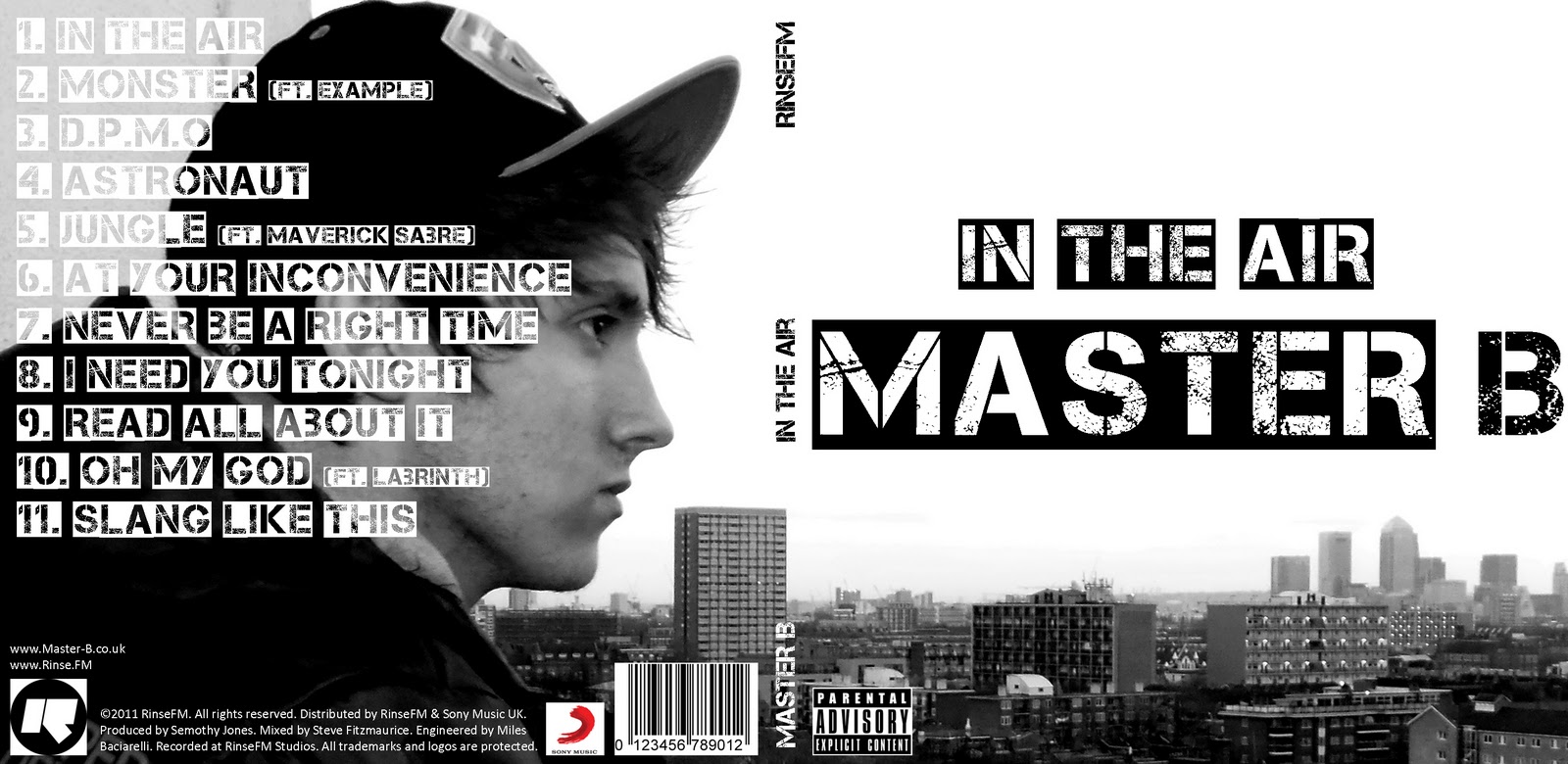
My advertisement uses the same image, font and colour scheme as the Digipack, with the addition of the red font which is used to make it stand out and catch people's eyes.
My ancillary products also follow the genre conventions for grime/rap music with the colour scheme, font, and the dark/urban feel to the products.

Evaluation: Question 4
Q4: What have you learned from your audience feedback?
The cinema screening was the best opportunity for us to see how a large audience responded to our music video.
Here is a video of the actual showing of our music video. Music Video Screening
From the audiences reaction, I can tell that most people liked the music video and thought it was well made. This was reinforced by some of the comments we received outside the cinema, where myself and Julien asked some people for feedback.
As you can hear, almost everyone liked our music video, and there were not many comments about how we could improve it, showing that we did a very good job. I learned the most from Mary’s feedback (who is one of the media teachers) which means she knows what she is talking about.
Also, the fact that Mary said she could not think of any improvements that we could have made to our video shows that it was very successful and we made no major mistakes.
Subscribe to:
Comments (Atom)